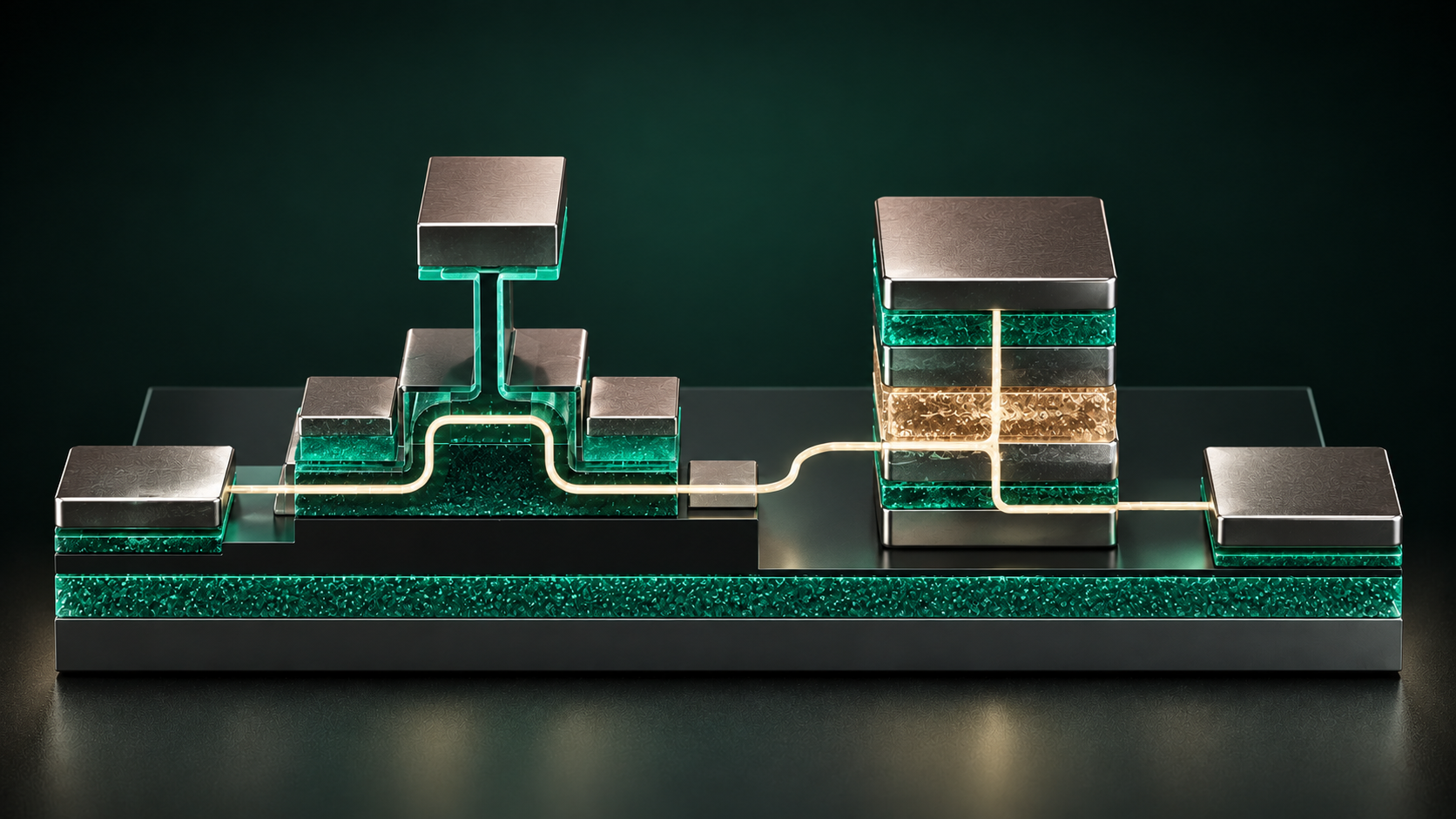
Experiment
A measured observation with sample structure, conditions and uncertainty.
RESEARCH PROGRAMME · VERSION 3.0
The supplied scenarios, technical drafts and article outlines are consolidated into a traceable plan. This is a protocol and claim audit, not a completed experiment.
Compare scenarios ↓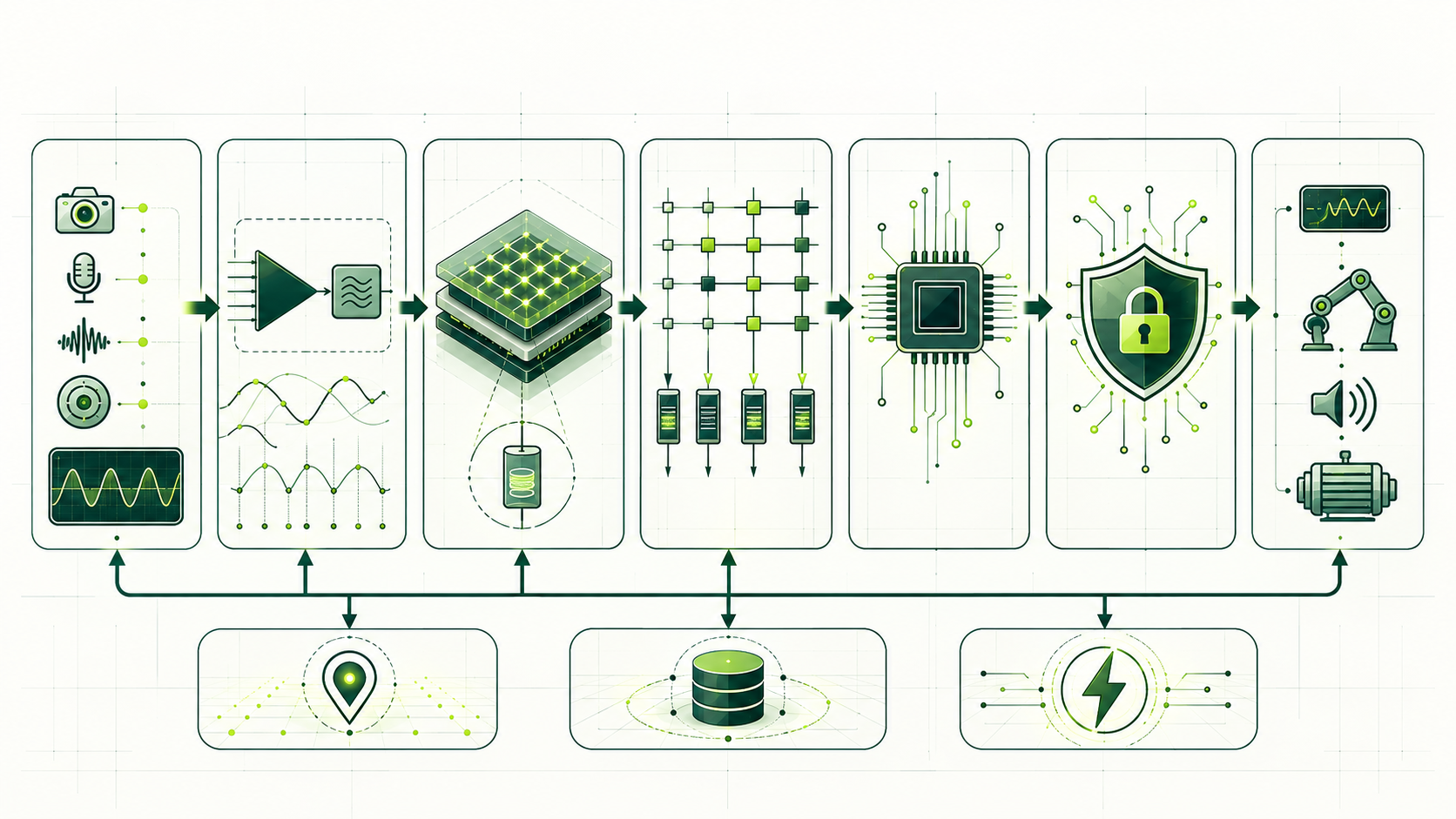
01 / STATUS
IGZO resistive devices with multilevel states and fabricated arrays have been published, but results belong to different structures and measurement conditions. Martins et al. report up to eight states and retention up to 10⁵ s in specific solution-processed devices. Naqi et al. fabricate a 10×10 array and report about 500 cycles and >10⁴ s retention. Their network accuracy figures are simulation-related. None of this proves the proposed sensor-to-actuator system.
A measured observation with sample structure, conditions and uncertainty.
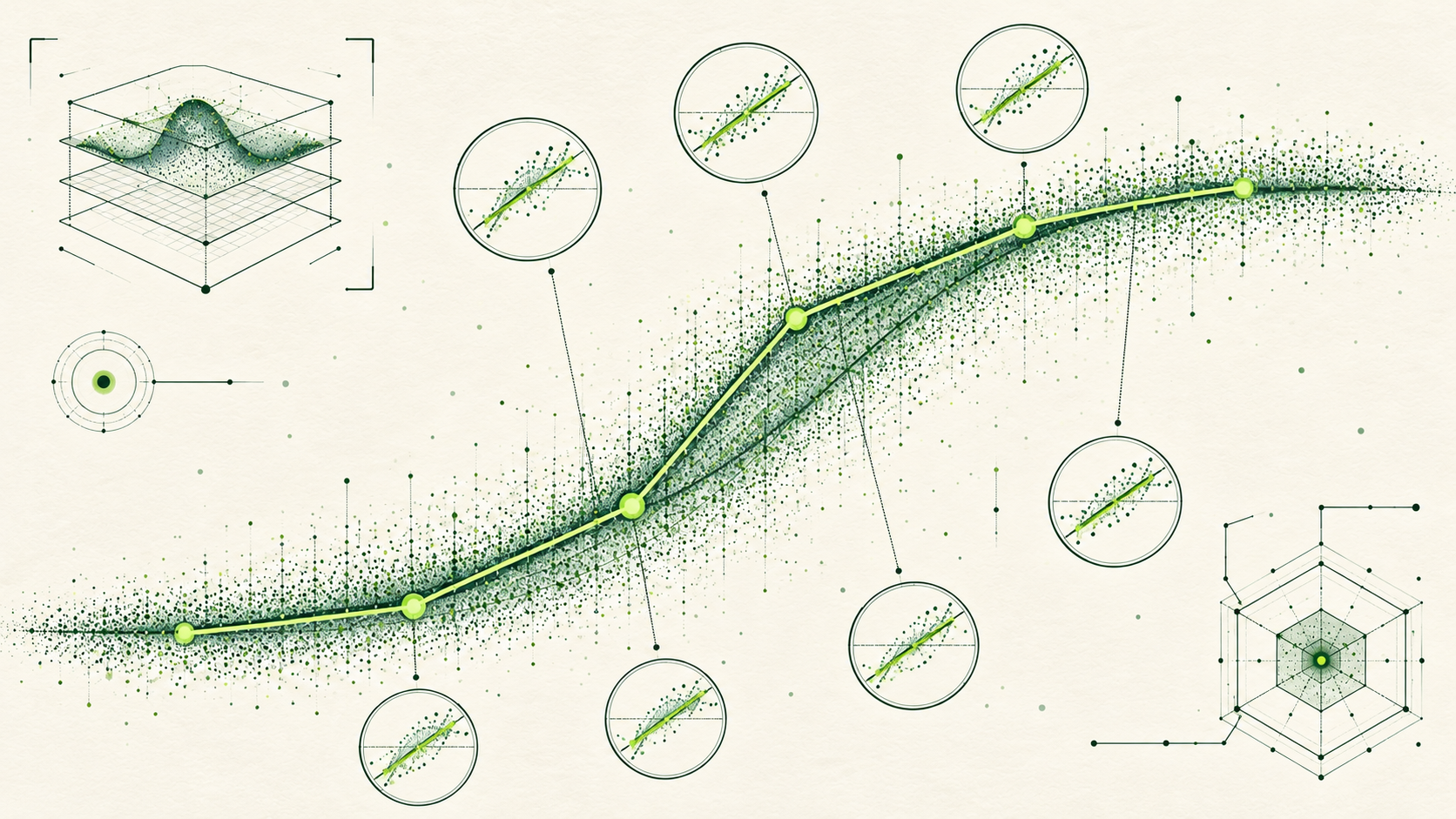
A simulation or estimate with explicit parameters and validation domain.

A proposed pass threshold awaiting project-specific measurements.
02 / IMPLEMENTATION CHOICE
Use externally fabricated IGZO devices. Retain incoming QC, integration, calibration, and edge demonstration in the programme. Draft planning window: 18–30 months; 24 months is an example, not a guarantee.
Document substrate, film, electrode, patterning, annealing, packaging and device test in one revision-controlled chain. Requires appropriate process and safety infrastructure. Draft window: 24–36 months.
Specify measurable delivery conditions, lot provenance and independent incoming QC. Keep driver integration and calibration in-house. Draft window: 24–36 months.
Choose after measuring usable conductance range, state overlap, read disturb, retention, variability and cell-level yield. Advance to 32×32 only after a preregistered error budget is met; 64×64 is conditional on measured scaling behaviour.

03 / PREREGISTERED MEASUREMENT
Lock task, data version and split, batch and device counts, instrument settings, digital baseline, metrics and exclusions before measurement.
Capture stack, geometry, raw I–V, switching distributions, multilevel overlap, retention, endurance, read disturb, temperature and rejects.
Compare passive crossbar and 1T1R, including line resistance, sneak paths, selection costs, ADC/DAC, reference cells, area and raw versus calibrated MVM error.
Record weight encoding, pulse and verification policy, piecewise-linear update correction, retraining and recalibration time/energy.
Report sensor-to-decision p50/p95/p99 latency, energy per valid inference, idle power, accuracy and environmental sensitivity.
Inject unauthorised writes and faults; publish failure cases, raw traces, code revisions, uncertainty and independent replication instructions.
Iⱼ = ΣᵢVᵢGᵢⱼ; E_write = ∫V(t)I(t)dt; E_infer = E_system / N_validMatching a digital baseline requires equal task, accuracy, precision, throughput and environment. Cell counts from one batch do not substitute for independent batch replication. MLCommons methodology ↗
04 / APPLICATIONS
Recorded sessions first, then shadow mode. Separate data by vehicle and session; measure event recall, false alarms and p99 latency.
Classify open or synthetic events. Relay-grade protection is outside scope without independent safety validation.
Separate simulation, bench, tethered and controlled flight. Test GPS loss, sensor degradation and defined safe state.
Measure stimulus–threshold response and hysteresis; do not infer clinical or biological equivalence. Related IGZO device study ↗
05 / GOVERNANCE AND ECONOMICS
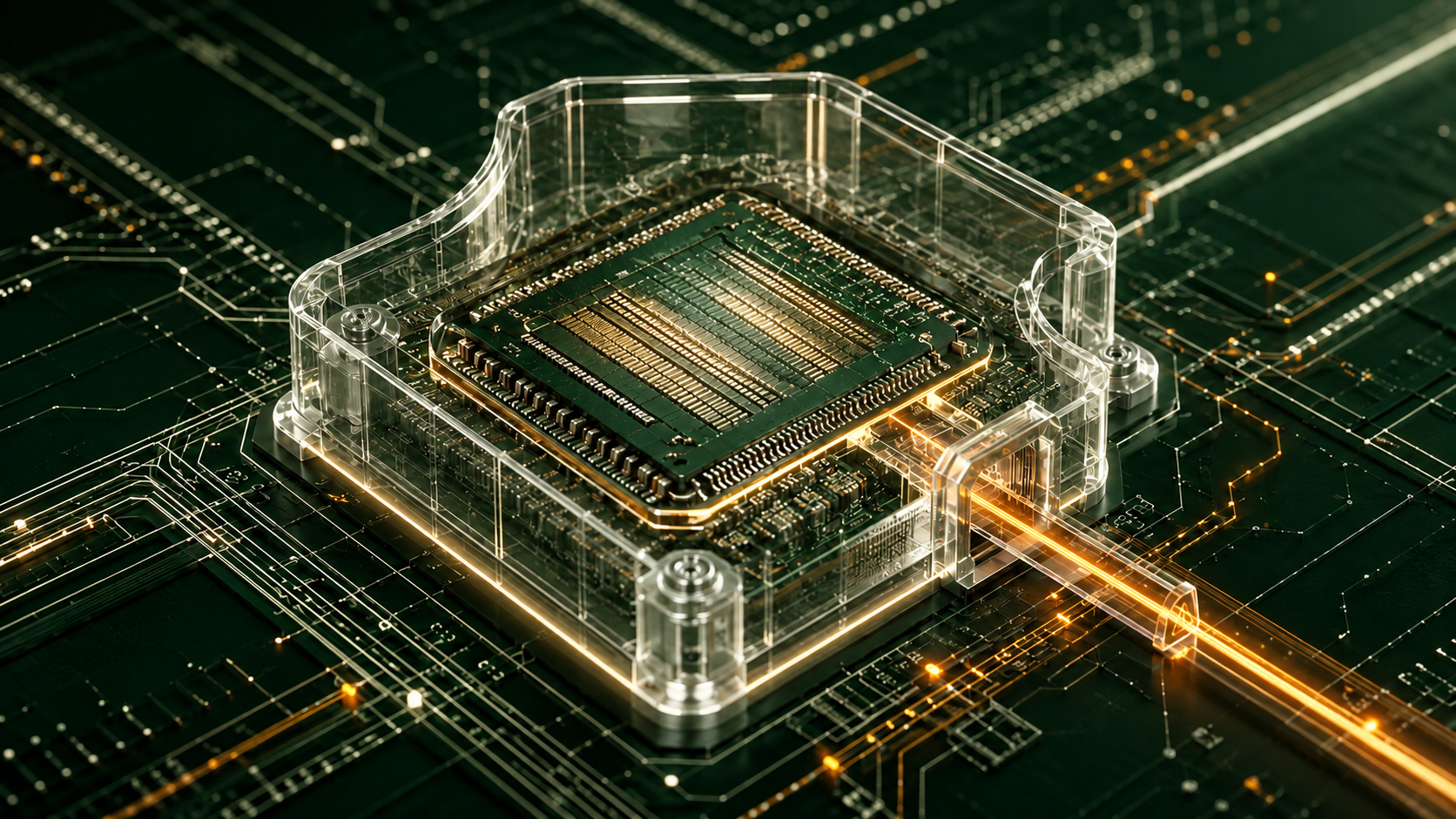
Patent EP3588594B1 describes a particular programming route; it cannot establish universal write-once security. Define authorised update windows, signed weight versions, logs, fault injection and safe recovery. The voluntary NIST AI RMF guides risk documentation; it is not a device certification.

Compare measured energy per valid inference with the same task and include sensor, converters, controller, idle power and maintenance. IEA data-centre electricity statistics are global context; cell energy does not determine facility PUE.
PORTFOLIOS 1–2 / ADDITIONAL AUDIT
Both PDF portfolios contain 13 embedded files. Compiled volumes repeat some of the individual documents; repetition is not independent evidence. Commercial pitches, drafts, patent compilations and peer-reviewed experiments are classified separately.
Claims of 300× processor efficiency, 90% less cooling and PUE≈1.0 are project assertions. Chip, server and facility boundaries must be measured separately. The IEA estimates 415 TWh of global datacentre electricity in 2024 and a cooling share ranging from about 7% to over 30% by facility type.
IEA evidence ↗Motorsport, driver-state and brain–machine interface narratives are candidate research uses. The portfolios do not provide independent end-to-end validation of 1 ms, 1 W, 99% accuracy or deployment for this IGZO platform.
Test first on recorded data with participant/session separation and shadow-mode evaluation.
Wang et al. (2026) report a 1-kb Pt/IGZO/SiNₓ/Ta array with endurance above 10⁶ cycles and retention above 10⁶ s. That result belongs to a different device stack and does not establish the portfolio platform's performance.
Nature Communications ↗The portfolio's F1–F6 facets denote physics, computation, life/cognition, infrastructure, economy and governance; they are a conceptual lens rather than six validated hardware stages. The patent compilation documents claims and scope, not readiness or measured system performance. Private counterparties and contract terms remain outside this public atlas.
06 / CLAIM AUDIT
Naqi et al.'s CNN and SNN percentages have a model/simulation context; they are not measured end-to-end accuracy for the proposed platform.
Retention from Martins and Naqi and the 500-cycle Naqi result belong to different devices or measurements. They cannot be merged into a universal IGZO specification.
Supplied drafts provide no raw sensor-to-actuator timestamps, complete power trace or matched GPU/FPGA comparison. These remain targets or hypotheses.
Example ORCID fields and “final paper” headings do not establish publication. A cited “Kim and Jeong 2020” entry could not be verified as written. The verifiable Hu et al. dot-product-engine paper is in Advanced Materials, not Nature Electronics.
Specific restricted-write behaviour cannot be generalised to all IGZO devices. Authorisation and security tests are separate.
Confidential-agreement text and party information in the supplied files were not published. Commercial predictions without independent experiments are not stated as measured facts.
07 / PRIMARY SOURCES
08 / DOWNLOADS
Device physics, QC, uncertainty and corrected claims.
Download ↓Energy boundaries, fair baselines, applications and safety.
Download ↓Use the interactive laboratory to explore idealised equations before designing measurements.